
The journey from a digital design to a physical part is a cornerstone of modern manufacturing, intricately woven into the fabric of various industries. Understanding the nuances of CNC machining, sand casting, metal stamping, and tooling systems is essential, as each method offers unique advantages and applications. This exploration will demystify these manufacturing processes, revealing their roles in production efficiency, material selection, and the critical differences that define their effectiveness. Join us as we delve into the mechanics that transform concepts into tangible products.
Overview of CAD and Its Importance
Computer-Aided Design (CAD) plays a crucial role in the manufacturing sector, facilitating the design process, rapid prototyping, and promoting collaboration among engineers and designers.
By utilizing CAD software such as AutoCAD or SolidWorks, teams are able to develop precise 2D and 3D models for 3D modeling, which results in enhanced accuracy and efficiency. For example, SolidWorks provides advanced simulation tools that enable engineers to evaluate their designs under various conditions, significantly reducing lead times.
Moreover, AutoCAD’s comprehensive documentation capabilities ensure that all stakeholders have access to the most current project information. Collectively, these tools support a cohesive workflow, improve visualization, and allow for expedited revisions, ultimately contributing to faster project completions.
CNC Machining
What is CNC Machining?
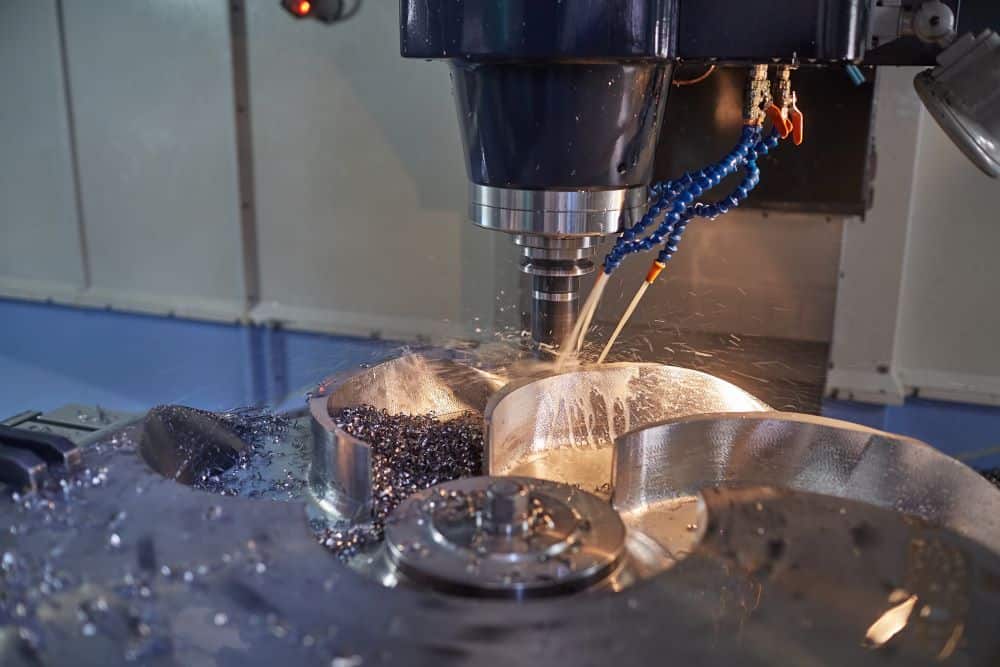
CNC machining refers to the utilization of pre-programmed computer software to regulate the movement of factory tools and machinery. This technology automates manufacturing processes through G-code, a specialized programming language tailored for controlling CNC machines.
In contrast to manual machining, where an operator executes each cut by hand, CNC machining offers enhanced precision and consistency, significantly minimizing errors.
Industries such as aerospace, automotive, and medical device manufacturing depend extensively on CNC machining to produce intricate parts and components efficiently.
For example, aerospace manufacturers employ CNC milling for the fabrication of turbine blades, achieving tolerances within thousandths of an inch, which is vital for ensuring safety and optimal performance.
Components of CNC Machines
Key components of CNC machines encompass the control unit, drive mechanisms, and cutting tools, all of which are essential to the machining process.
The control unit, typically a computer interface, interprets design specifications and converts them into precise instructions for the machine. For example, manufacturers such as Haas and Okuma offer customizable software that enables operators to adjust parameters with ease.
Drive mechanisms, including servos or stepper motors, are responsible for the precise movement of cutting tools along multiple axes, typically X, Y, and Z, thereby ensuring accuracy in machining operations.
Cutting tools are selected based on the material to be processed; for instance, carbide tools are commonly preferred for machining metals, while high-speed steel is more suitable for softer materials.
A comprehensive understanding of the function of each component significantly enhances machining efficiency and precision.
Advantages of CNC Machining
CNC machining presents numerous advantages over traditional machining methods, including enhanced accuracy, repeatability, and lower labor costs.
One notable benefit is precision; CNC machines can achieve tolerances as tight as +-0.001 inches, which is essential for industries such as aerospace and automotive. Furthermore, the automation in manufacturing provided by CNC technology reduces the reliance on skilled labor, resulting in cost savings of up to 20%.
Improved production speed and tooling costs are another significant advantage, with certain CNC systems capable of executing complex tasks up to 50% faster than manual processes.
Investing in CNC technology enables manufacturers to optimize their operations, reduce scrap reduction, while minimizing waste, thereby maximizing overall efficiency and profitability. For more details on CNC machining solutions, visit CNC Machining Solutions.
Applications of CNC Machining
CNC machining is extensively utilized across various industries, including aerospace, automotive, and medical device manufacturing.
In the automotive sector, CNC machining plays a crucial role in producing precision components like engine cylinder heads and crankshafts, which are essential for ensuring optimal performance and durability.
In the aerospace industry, it facilitates the creation of lightweight yet robust parts, including brackets and housings, that adhere to stringent safety standards. Similarly, in the healthcare sector, CNC technology is instrumental in manufacturing intricate surgical instruments and implants, requiring high precision to guarantee patient safety.
By leveraging advanced CAD/CAM software for manufacturing workflow, manufacturers can optimize designs, reduce lead times, and maintain consistency across products, thereby significantly enhancing their operational efficiency.
Sand Casting
What is Sand Casting?
Sand casting is a manufacturing process that involves creating a mold from sand to shape molten metal into specified forms. This technique has a rich history, dating back thousands of years, and has evolved from the practices of ancient artisans to the methodologies employed by contemporary manufacturers.
Currently, sand casting is preferred for its versatility in foundry processes, particularly with metals such as aluminum, iron, and bronze, which exhibit favorable fluidity and strength characteristics.
Aluminum, in particular, is valued for its lightweight properties, making it suitable for automotive components, while gray iron is recognized for its exceptional wear resistance, commonly utilized in engine blocks.
Modern advancements in sand casting techniques, including the adoption of sodium silicate sand, have significantly enhanced precision and reduced defects. These improvements ensure that products adhere to the stringent quality standards required in today’s manufacturing landscape.
Materials Used in Sand Casting
Common materials utilized in sand casting include silica sand, clay, and various metals such as aluminum and bronze. Silica sand is commonly preferred due to its high melting temperature and wide availability, which provides a stable mold base.
Clay serves as a binder, enhancing the strength of the mold and preventing the sand from disintegrating during the casting process.
To enhance thermal stability, additives such as water or organic binders can be incorporated into the mixture, which assist in maintaining the shape and supporting intricate designs. For instance, incorporating approximately 5% clay by weight typically improves the integrity of the mold.
An optimal sand mixture generally consists of 90% silica sand and 10% clay, resulting in a durable mold that is suitable for high-temperature applications.
Steps in the Sand Casting Process
The sand casting process consists of several essential steps, including pattern making, molding, pouring, and finishing.
To initiate the sand casting process, a pattern is first created, typically constructed from materials such as wood or metal, to define the mold’s shape.
Subsequently, the sand mixture is prepared, incorporating a bonding agent to maintain the mold’s integrity.
The molten metal is then poured into the mold, with careful attention to ensuring an even flow to prevent defects.
Once the metal has cooled and solidified, the mold is meticulously removed, and finishing processes, such as grinding or polishing, are undertaken to achieve the desired surface quality.
It is important to note that the duration of each of these steps can vary significantly, depending on the complexity and size of the casting.
Metal Stamping
What is Metal Stamping?
Metal stamping is a manufacturing process that employs dies and tooling design to shape metal sheets into specified forms. This technique is extensively utilized across a range of industries, including automotive and electronics, for the production of components such as brackets, chassis, and housings.
One of the primary advantages of metal stamping is its efficiency; the process can generate thousands of parts per hour, making it an excellent choice for mass production. Furthermore, it provides superior precision and minimizes waste in comparison to traditional machining methods.
For organizations aiming to optimize their production capabilities, investing in automated stamping presses and CNC technology can significantly enhance output, ensuring high-quality results while effectively reducing labor costs.
Types of Metal Stamping Processes
Various metal stamping processes, including progressive stamping, deep drawing, and compound stamping, are designed for specific applications, incorporating advanced machining techniques.
Progressive stamping is particularly suited for high-volume production, as it automates the shaping process through multiple stages within a single machine. This method is extensively utilized in the automotive industry for the production of components such as brackets and clips.
Conversely, deep drawing is most effective for producing complex, hollow shapes from sheet metal. This technique is commonly employed in the manufacturing of containers and components, such as fuel tanks.
Compound stamping integrates elements from both techniques, facilitating the creation of intricate designs while reducing the number of operations required. The selection of each method is determined by factors such as production volume, design complexity, and material type.
Comparison of Manufacturing Processes
Conducting a comparison of manufacturing processes, including CNC machining, sand casting, and metal stamping, is essential to identify the most appropriate method for particular projects, considering factors such as dimensional tolerances and tooling lifecycle.
CNC Machining vs. Sand Casting
CNC machining is renowned for its precision and speed, whereas sand casting provides flexibility in design and material selection, rendering each process suitable for distinct applications.
When determining the appropriate method between CNC machining and sand casting, it is essential to consider the specific requirements of the project at hand. CNC machining is particularly advantageous for producing high-precision components, commonly utilized in aerospace and automotive industries, with tolerances achievable within +-0.001 inches.
In contrast, sand casting is well-suited for creating larger and more intricate shapes, making it a preferred choice for the fabrication of complex metal components.
In scenarios where rapid turnaround is critical, CNC machining can produce prototypes within a matter of hours. Conversely, sand casting typically involves longer lead times due to the complexities involved in the mold-making process.
CNC Machining vs. Metal Stamping
CNC machining offers the capability for intricate designs with a high degree of accuracy; however, metal stamping is particularly suited for high-volume production at reduced per-unit costs, especially when considering process optimization.
Metal stamping is highly effective in producing large quantities of components rapidly, making it the preferred method for industries such as automotive and electronics. For example, companies frequently employ progressive dies to automate the stamping process, which enables the creation of complex shapes in a single cycle.
Conversely, CNC machining is particularly advantageous for custom, low-volume projects where precision is of utmost importance, such as in the manufacturing of aerospace components. Consequently, the decision between these two methods is contingent upon the complexity of the design in relation to the scale of production.
Sand Casting vs. Metal Stamping
Sand casting is typically more cost-effective for low-volume production of complex shapes, while metal stamping is favored for high-volume production runs of simpler forms. When determining the appropriate process, it is essential to consider both the production volume and the complexity of the design.
For example, if the project involves the production of intricate components such as engine blocks or artistic castings, sand casting may be the most suitable option due to its capability to accommodate complex geometries. In contrast, if the requirement is for thousands of identical parts, such as brackets or plates, metal stamping is preferable, as it provides higher production speeds and lower per-unit costs.
It is crucial to evaluate the specific requirements of your project carefully in order to select the most efficient manufacturing method.
Frequently Asked Questions
What is CNC machining and how does it work?
CNC machining is a manufacturing process that uses computer-controlled machines to create precise and intricate parts from raw materials. The process involves using a computer-aided design (CAD) software to design a part, which is then translated into instructions for the CNC machine to follow. The machine then uses various cutting tools to remove material from the raw material and create the desired shape.
How does sand casting differ from CNC machining?
Sand casting is a process that involves pouring molten metal into a sand mold to create a part. Unlike CNC machining, sand casting does not involve cutting or shaping the material. Instead, the molten metal takes the shape of the mold, creating a cast part with a rough surface that can be further refined through machining or other finishing processes.
What is the advantage of using metal stamping in the manufacturing process?
Metal stamping is a cost-effective and efficient way to produce large quantities of parts. It involves using a machine called a stamping press to cut or shape metal into the desired form. This process is highly repeatable and can produce parts with high precision and accuracy, making it a popular choice for mass production.
How important is CAD in the process of CNC machining, sand casting, and metal stamping?
CAD plays a crucial role in all three processes. It allows engineers to design complex parts with precision and accuracy, which can then be translated into instructions for the respective machines. Without CAD, it would be challenging to produce intricate and precise parts, making it an essential tool in modern manufacturing.
What are the limitations of CNC machining, sand casting, and metal stamping?
While all three processes offer a range of advantages, they also have their limitations. CNC machining is limited by the size and complexity of the machine, while sand casting is not suitable for producing small or intricate parts. Metal stamping is limited by the material’s thickness and the complexity of the shape that can be produced.
What factors should be considered when choosing between CNC machining, sand casting, and metal stamping?
The factors to consider include the quantity of parts needed, the complexity of the design, the desired level of precision, the material being used, and the budget. Each process has its strengths and limitations, so it is essential to assess these factors to determine the most suitable method for a particular project.