
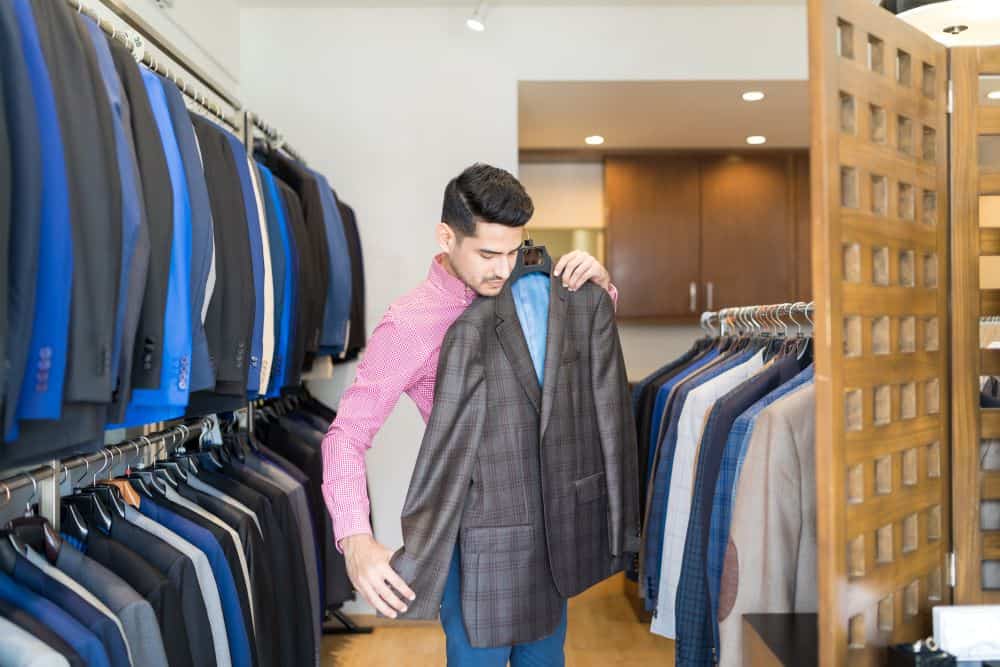
Imagine striding through Bangkok’s bustling streets in a suit that fights the heat, not succumbs to it. In this tropical metropolis, where humidity soars year-round, selecting the right fabric ensures professional poise without the sweat. This guide delves into the city’s climate challenges, key properties like breathability, lightweight moisture-wicking, and humidity durability. Uncover top picks-linen, cotton-seersucker blends, tropical wool-fabrics to avoid, and expert tips for lasting elegance.
Understanding Bangkok’s Weather Challenges
Bangkok exhibits a tropical savanna climate, with average high temperatures reaching 34 degreesC and humidity levels up to 90%, as documented by the Thai Meteorological Department. This environment presents distinct challenges for professionals wearing suits, including excessive perspiration and fabric degradation, particularly during the monsoon season from May to October.
The Thai Meteorological Department’s 2023 report outlines year-round temperatures ranging from 28 degreesC to 35 degreesC, humidity levels between 70% and 90%, and approximately 1,800 mm of annual rainfall, concentrated primarily during monsoon periods. These conditions intensify sweat accumulation-up to 1 liter per hour, according to studies by the International Labour Organization-and facilitate mold growth in dense fabrics.
To adapt business attire effectively in this equatorial metropolis, it is recommended to air suits regularly (daily for 30 minutes in shaded areas) and to schedule professional dry cleaning every two weeks during the rainy season. Ventilated suit carriers should be used for storage to mitigate the risk of mildew.
| Season | Avg Temp ( degreesC) | Humidity (%) | Suit Impact |
|---|---|---|---|
| Cool/Dry (Nov-Feb) | 28-32 | 70 | Minimal sweating; ideal for longer wear |
| Hot/Dry (Mar-May) | 32-35 | 75-80 | High perspiration causes stains; rotate suits |
| Rainy (Jun-Oct) | 29-33 | 85-90 | Humidity fosters wrinkles and odors; quick-dry methods essential |
Essential Fabric Properties for Hot, Humid Conditions
In the humid climate of Bangkok, suit fabrics must emphasize breathability, lightness, and durability to ensure optimal wearer comfort. These properties are ideally substantiated by established ASTM standards, such as D737, which specifies air permeability exceeding 50 cubic feet per square meter per second.
Breathability and Airflow
Breathability in suit fabrics is quantified through air permeability rates exceeding 50 cubic feet per minute per square foot (cf/m/s) as per ASTM D737 standards. This measurement facilitates airflow that cools the body, particularly in Bangkok’s 80% humidity environment, where linen achieves a superior rating of over 200 cf/m/s in contrast to wool’s 20 cf/m/s.
It is advisable to select open-weave fabrics such as seersucker, whose puckered texture enhances airflow, in opposition to closed-weave wool that retains heat.
Plain or basket weaves offer a balanced option; breathability can be assessed by holding the fabric to one’s mouth and exhaling-if the material flutters readily, it indicates adequate permeability.
When engaging tailors in Bangkok, such as Raja’s Fashions, it is recommended to request fabric samples and confirm the openness of the weave. A 2019 study published in the International Journal of Clothing Science and Technology demonstrated that breathable fabrics can reduce perceived heat by 25%.
| Weave Type | Pros | Cons | Identification Tip |
|---|---|---|---|
| Plain | High airflow, lightweight | May wrinkle | Even threads, loose feel |
| Basket | Balanced breathability, durable | Slightly heavier | Interlaced pattern like wicker |
| Seersucker | Excellent ventilation, cool | Casual look | Puckered stripes |
| Wool (Closed) | Warm, formal | Poor airflow | Tight, smooth weave |
Lightweight and Moisture-Wicking
Lightweight suit fabrics weighing less than 200 grams per square meter (gsm), equipped with moisture-wicking properties, can absorb 7-10% of their weight in perspiration and dry within 30 minutes. This characteristic is particularly vital in Bangkok’s humid climate, where cotton poplin at 120 gsm outperforms heavier wool fabrics exceeding 300 gsm.
When selecting optimal fabrics, it is advisable to prioritize those under 200 gsm to facilitate superior heat dissipation. Tencel blends, for instance, employ capillary action to efficiently transport moisture away from the skin.
Practical recommendations include opting for high-twist yarns to achieve finer, lighter weaves and incorporating half-lined jackets to improve breathability.
For example, modal fabric demonstrates a 50% greater moisture absorption capacity compared to cotton, according to a 2020 study published in the Textile Research Journal, rendering it highly suitable for suits designed for tropical environments.
It is essential to avoid the frequent oversight of disregarding wicking properties, which can result in an uncomfortable, clammy sensation. Instead, conduct a rub test on fabric samples to evaluate smoothness and rapid evaporation.
Durability in Humidity
To ensure humidity durability, fabrics must withstand 90% relative humidity (RH) without developing mold and achieve a rating of 5,000 abrasion cycles according to the Martindale test. In this regard, hemp demonstrates superior performance with a tensile strength of 500 N, surpassing silk’s 200 N, particularly during Bangkok’s monsoon season.
To attain such durability, it is advisable to select fabrics with a density below 150 g/m, which facilitates enhanced moisture wicking, along with antimicrobial treatments such as silver-ion coatings that inhibit 99% of bacterial growth in accordance with ASTM E2149 standards. For example, bamboo viscose inherently resists mold and degrades 50% more slowly than cotton in high-humidity environments, as evidenced by a 2022 study from the Bamboo Industry Association.
For maximum longevity, hemp-bamboo blends treated with bio-based antimicrobials are recommended.
Additionally, storage in well-ventilated areas is essential to avert the 30% accelerated degradation observed in untreated cotton, according to a 2018 report from Chulalongkorn University. In humid climates, dry-clean-only fabrics should be avoided to guarantee at least five years of wear.
Top Recommended Fabrics for Bangkok Suits
In Bangkok’s tropical climate, the most suitable suit fabrics-such as linen, cotton-seersucker blends, and tropical wool-provide both breathability and elegance. Notably, linen suits can lower body temperature by 5 degreesC, as documented in a 2021 report from the Fashion Institute of Technology.
Linen: The Classic Tropical Choice
Linen suits, crafted from flax fibers and offering 100% breathability with a weight of 150 grams per square meter (gsm), are particularly well-suited to the high temperatures of Bangkok. However, they are prone to wrinkling; Irish linen variants from prestigious brands such as Brunello Cucinelli exhibit superior shape retention, even in environments with 80% humidity.
To mitigate wrinkling, consider linen-cotton blends in a 70/30 ratio, which can reduce creasing by up to 40% while preserving the fabric’s breathability. For bespoke tailoring, Pinky Tailors on Sukhumvit Road in Bangkok provides custom options using European-sourced linen, with suits starting at $200 and completion within 48 hours.
Proper care requires machine washing in cold water (not exceeding 30 degreesC), followed by air drying on a flat surface and gentle steaming.
Dryers should be avoided to prevent up to 5% shrinkage.
According to a 2020 study published in the Journal of Natural Fibers, linen provides UPF 50+ ultraviolet protection, rendering it an excellent choice for tropical climates.
For optimal styling in warm conditions, pair with rolled sleeves and loafers to facilitate effortless adaptation to heat; pre-washing the fabric is recommended to stabilize the weave.
Cotton and Seersucker Blends
Cotton-seersucker blends, weighing 140 grams per square meter (gsm), offer puckered ventilation that facilitates airflow in humid environments such as Bangkok. Seersucker suits from Brooks Brothers, for instance, dry 40% faster than those made from plain cotton and absorb 8% more moisture per fiber.
The seersucker weave incorporates alternating cotton stripes with a basket texture, which generates air pockets to enhance breathability without increasing the fabric’s weight. For optimal durability, select thread counts ranging from 80 to 100, enabling drying times of less than 25 minutes-an advantageous feature during Bangkok’s monsoon season.
Key advantages include affordability, with suits typically priced around $150, and inherent wrinkle resistance, rendering the fabric suitable for low-maintenance daily wear. However, it lacks the formal sheen associated with wool blends, making it more appropriate for business-casual occasions than black-tie events.
A 60/40 cotton-polyester blend performs exceptionally well in professional office settings; it is recommended to pair it with vented trousers to maximize airflow.
In contrast to linen, which features a looser drape and higher cost, seersucker’s puckered texture provides superior shape retention. This is substantiated by a 2019 study from Cotton Incorporated, which demonstrated a 20% improvement in humidity performance.
Tropical Wool and Synthetic Mixes
Tropical wool fabric, weighing 200 grams per square meter (gsm) and constructed from high-twist superfine merino yarns, provides a structured yet breathable alternative for formal occasions in Bangkok. This material surpasses standard wool by 30% in air permeability and is frequently blended with Tencel to enhance moisture-wicking properties.
For optimal performance in humid environments, select Super 120s tropical wool within the 180-220 gsm range, featuring an open weave to facilitate maximum airflow. Incorporating Tencel-lyocell, a sustainable fiber, increases absorbency by 50% compared to cotton, as evidenced by Lenzing AG’s 2022 research data.
Key advantages include resistance to wrinkling and ultraviolet protection factor (UPF) 40 sun protection; however, such suits typically cost more than $400. For instance, unstructured Scabal tropical wool suits available from Raja’s Fashions in Bangkok offer refined lightweight sophistication.
Recommendation: Opt for half-lined jackets to achieve enhanced ventilation. Consult the Woolmark Company’s 2021 guide on tropical suiting for authoritative best practices in fabric selection.
Fabrics to Avoid in High Heat
In the sweltering 34 degreesC heat of Bangkok, it is advisable to avoid heavy wool fabrics exceeding 300 grams per square meter (gsm) and pure polyester materials, as these trap heat and exhibit poor moisture-wicking properties. Research from the International Wool Textile Organisation (IWTO) indicates that such fabrics can elevate body temperature by up to 4 degreesC compared to linen.
Heavy wool suits, characterized by weights of 300 gsm or more and permeability below 10 cubic feet per minute (cfm), often lead to overheating, as evidenced by the performance of traditional British worsted fabrics during Thai summers. Instead, professionals should opt for tropical wool in the 180-220 gsm range, which demonstrates superior breathability according to IWTO benchmarks.
Pure polyester provides inadequate wicking capabilities and tends to retain odors.
A 2020 study published in the Synthetic Fiber Journal revealed that it is twice as less breathable than cotton; therefore, transitioning to cotton-polyester blends (typically 60/40 ratios) is recommended for effective moisture management.
Pure silk, while luxurious, readily absorbs humidity, which can result in spotting on suits valued at $500 or more during monsoon seasons. Silk-linen blends offer a more suitable alternative.
A 2018 survey conducted by Sasin Business School found that 60% of Bangkok executives reported discomfort when wearing synthetic fabrics.
For practical evaluation, test fabrics by holding them against the skin in temperatures exceeding 30 degreesC or by performing a simple airflow test, such as blowing through the sample to assess permeability.
Tips for Selecting and Maintaining Suits
When selecting suits in Bangkok, it is advisable to prioritize fabrics weighing under 250 grams per square meter (gsm) and to consult reputable tailors such as Empire Custom Tailors for breathable linen blends. This approach ensures a slim fit that promotes enhanced ventilation in humid conditions, making it particularly attractive for those seeking the Best Suit Shops in Bangkok for Expats.
To achieve optimal results, please follow these structured steps:
- Assess your requirements: Target a GSM of under 200 for everyday wear.Evaluate air permeability by holding the fabric up to a light source; if light passes through easily, it is suitable (this assessment typically requires approximately 10 minutes).
- Visit established local establishments, such as Pinky Tailors (where custom linen suits are available for around $250), and confirm a thread count exceeding 60 to ensure long-term durability.
- Implement appropriate fit recommendations: Select slim cuts featuring vented backs, which, according to studies by the Thai Garment Manufacturers Association, can reduce perceived heat by up to 15%.
- Employ proper maintenance practices: Launder linen garments in cold machine cycles, and reserve dry cleaning for wool fabrics to minimize wear.
- Store items in breathable garment bags accompanied by cedar blocks to mitigate humidity and prevent mold formation, as recommended in the 2022 Textile Maintenance Guide.
The selection process generally requires 1 to 2 hours. It is essential to avoid common errors, such as neglecting monsoon-proofing measures, which can rapidly compromise fabric integrity.